
What is Spoonie Nutrition? A Non-Diet Dietitian’s Approach to Chronic Illness & Food
Welcome back to The Spoonie Dietitian Blog. In this blog I’m going to give you more insight into spoonie nutrition, and my approach as a non-diet Dietitian who is also a spoonie.
I have Endometriosis, POTS and hypermobility. This led me to want to help other spoonies manage their symptoms and improve their quality of life — it's actually the whole reason The Spoonie Dietitian exists, if you want the full story. I'm also a non-diet Dietitian who spent at least the first half of my life trying to shrink myself. That was until I discovered body diversity and the non-diet and HAES movements.
What’s a “Spoonie”?
A spoonie is someone with a chronic illness and/or a disability, it comes from Spoon Theory by Christine Miserandino. Spoon Theory explains how it feels to live with a chronic illness and/or disability, using spoons to represent energy. Spoonies have a set number of spoons — or a certain amount of energy — each day. Every spoonie's experience is different. The number of spoons a task takes can differ between two spoonies entirely, or shift for the same person from one day to the next. If you want to know more, I have a whole blog post on Spoon Theory, check it out here.
Spoonies also differ in the symptoms they experience, based on their specific illness and/or disability. Management looks different for each person too, so it's important to acknowledge that what helps one person's symptoms may not help another's. Everything needs to be individualised.
What is “Spoonie Nutrition”?
Spoonie nutrition is tailored to your fluctuating energy, symptoms and needs. It focuses on flexibility, nourishment and self-compassion. It acknowledges that your capacity for food prep and eating changes day to day. On a low symptom day, you may be able to cook balanced meals from scratch and meet all your nutrition needs easily. But during a flare, you may only be able to manage pre-prepared foods, liquids, or toast.
For me, a bad flare day genuinely means toast or a frozen meal, not a smoothie bowl or a home-cooked meal — and that's still a completely valid, nourishing choice. On these days, being fed is best. Don't force yourself to cook a meal you can't manage. Do what you need to, and have a proper meal once you feel better. It's okay for your food and nutrition to change day to day, with your body's changing needs.
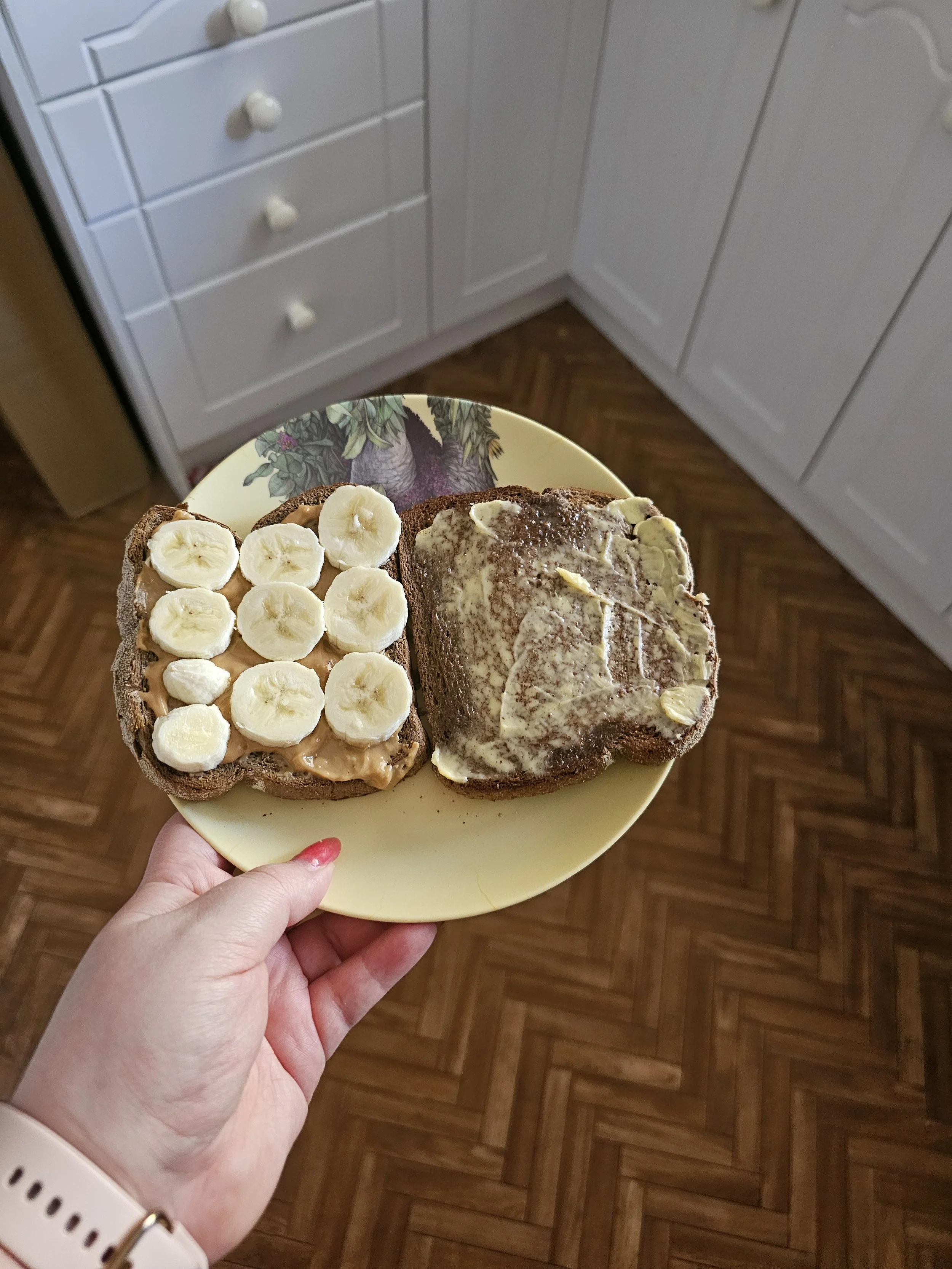
"It's okay for your food and nutrition to change day to day, with your body's changing needs."
The Non-Diet Approach
In my practice I use a non-diet approach. Non-diet means no strict rules, no food policing, and learning to listen to your body to provide what it needs. It focuses on body acceptance, intuitive and mindful eating, and health rather than body size — in contrast with traditional diet culture approaches, which focus on weight and strict food rules.
The non-diet approach works well with spoonie nutrition, thanks to its focus on intuitive eating and listening to your body, rather than factors like weight, which aren't always in our control. As a non-diet Dietitian, I can help you learn to tune into your body's hunger and fullness cues, nourish your body in a flexible way, and relearn to treat yourself and your body with compassion.
So, if you're a spoonie and you're after practical tips, support and myth-busting, subscribe to my newsletter or follow me on Instagram. And if you're ready for 1:1 support, you can find that here.
Comment below with your biggest nutrition struggle as a spoonie — I read every one.
🩷Emma